
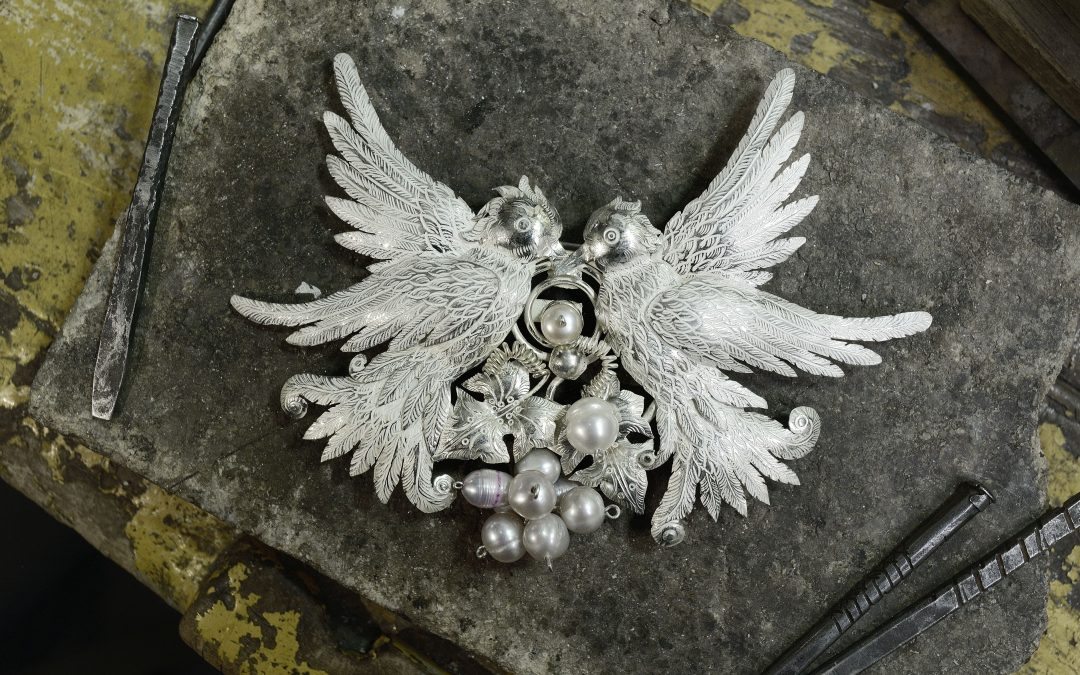
(12-08-2024) The country’s gold jewelry exports reached US$84.3 million during the first half of 2024, which doubles the level obtained in the first half of the previous year, when they registered US$41.9 million, which promises that this will be a great year for the sector.
There is even the possibility of beating the record obtained in 2018, a peak year, with US$107 million–, Rocío Mantilla, President of the Jewelry and Goldsmithing Committee of the Association of Exporters (ADEX), told MinerAndina.
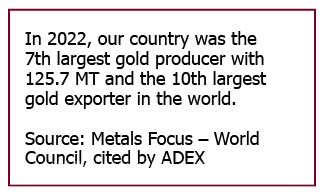 Among the factors that have contributed to this increase in gold jewelry exports in recent months is the modification to the VAT Law (DS- No. 214-2023-EF) that aims to guarantee access to raw material (gold) for jewelry producers, which came into force on November 1, 2023.
The increase in the international price of gold has also had an influence, so that, despite the decrease in the volume exported at the end of 2023 – from 8 MT in 2022 to 7.5 MT in 2023 – the FOB value of exports increased by 24%.
The ongoing international and local demand for luxury, beauty, and fashion items such as jewelry, combined with our historical goldsmithing legacy, presents a context that reaffirms Peru as an international reference in jewelry manufacturing. It also provides an opportunity to highlight the expertise of Peruvian goldsmiths and their primary materials: metals such as gold and silver, with copper also being used, though to a lesser extent.
 The paradox, however, is that despite Peru being a mining country, jewelry producers are often forced to import metal instead of acquiring it from national mining producers.
This scenario highlights the potential to generate forward linkages in our mining industry, particularly in the production of precious metals, mainly gold, a topic that has received little attention.
All of this is happening in a context where global jewelry market sales are projected to increase by 20% to US$322 billion by 2025, compared to US$270 billion in 2022 (Source: Statista, cited by ADEX).
Jewelry cluster
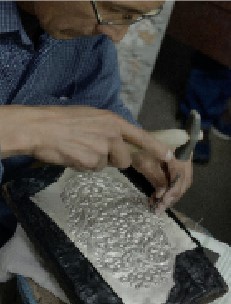
Peru is a “jewelry cluster country”, says Rocío Mantilla, noting that goldsmiths are found throughout the country, with a significant concentration in Lima, but also in Huancayo (Junín), Catacaos (Piura), San Blas (Cusco), Cajamarca, and Arequipa.
“They are jewelers and goldsmiths who began in these places, likely because they had the raw materials nearby, which led to the formation of towns where the majority, including children and grandchildren, dedicated themselves solely to jewelry and goldsmithing. In those times, with no opportunity for formal education, they had no other option but to pursue jewelry and goldsmithing, which turned out to be a blessing, as they discovered a great potential in their hands”, said the executive.
She added that the Peruvian goldsmith learns the craft because they had a master who taught them; they did not attend a school or university, as is the case in other countries like Italy or Turkey, where they receive professional training. Their art is passed down from master to apprentice, from generation to generation, which has led Peru to become an international reference in jewelry manufacturing.
VII International Jewelry and Goldsmithing Congress
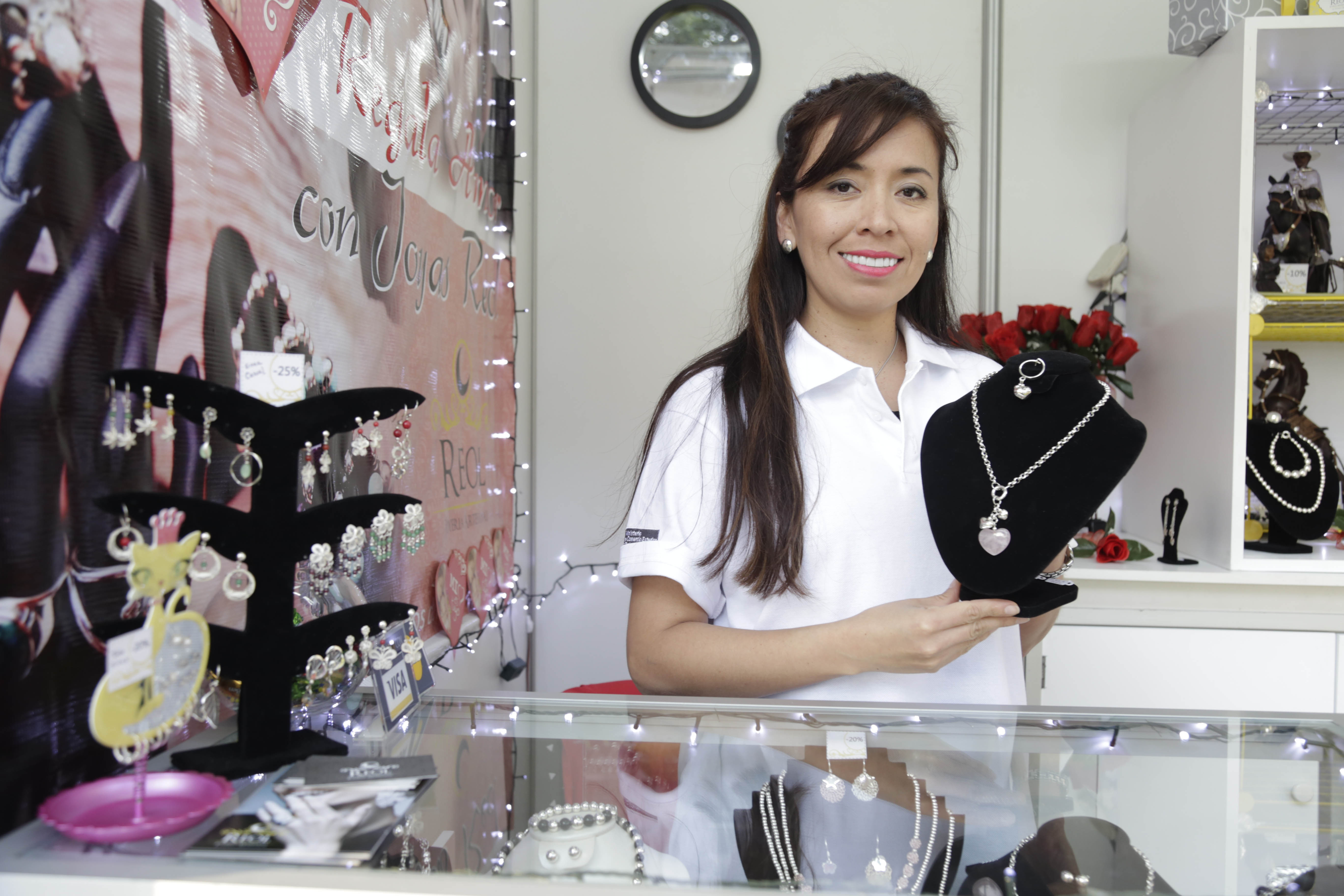 To bring together master jewelers and their value chain, the 7th International Jewelry and Goldsmithing Congress will be held from October 1st to 4th at the Lima Convention Center, organized by the ADEX Jewelry and Goldsmithing Committee with the support of the Ministry of Foreign Trade and Tourism.
Rocío Mantilla emphasized that this event is the only one in America with the status of a Congress, meaning it includes conferences, workshops, as well as a fair.
The conclave aims to integrate the value chain of this sector, including not only goldsmiths and jewelers but also designers, marketers, “and since two congresses ago, we have focused on attracting more technicians and university students”. This last group is important to ADEX, as they have observed that many young people finish their studies and wish to start a business, “but they don’t know in what field; so we have created a jewelry and goldsmithing diploma through the ADEX school, together with the Jewelry and Goldsmithing Committee, to teach them”.
Another of their expectations is to also include mining companies that can supply them with the primary raw material, such as metal.
But the main highlight of the 7th Congress is that it will be the first to have an international character, with the presence of jewelers and goldsmiths from Mexico and Colombia. This will foster greater synergy development, networking, and joint learning.
For this reason, the executive stressed the importance of jewelry companies forming alliances with goldsmiths and small jewelry producers who have all the “know-how” to contribute to maintaining exports of valuable handmade pieces.
“The first two days will feature technical workshops, including electroplating, 3D design, how to export jewelry, etc. On October 3rd and 4th, there will be keynote lectures where we will bring the latest in sustainability, trends, commercial opportunities, which markets to target when creating a collection piece, why they should charge appropriately for that piece, and also who the potential buyers could be, for example,” explained Rocío Mantilla.